

Tourism Manifesto Press Release EES Implementation Issues: EU Action Required
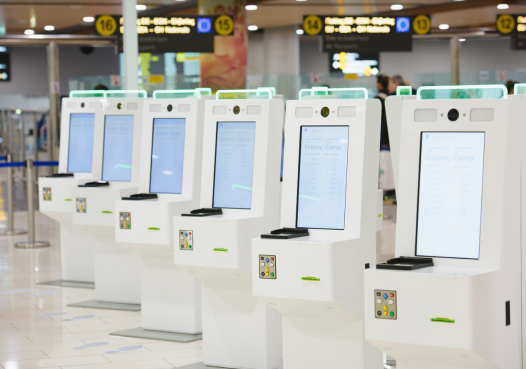
Brussels, 26 November 2026: The Tourism Manifesto adds its voice to calls for the EU to renew discretion to suspend biometric collection until persistent EES implementation issues are properly addressed. Europe is open for business and well connected, but EES is causing unnecessary friction.
With up to 41 million international arrivals and USD 45.4 billion in visitor spending at risk due to the operational impact of the EES, renewed permission to suspend biometric collection is an urgent, pragmatic and necessary response.
Risk to Competitiveness, Resilience, and Passenger Experience
EES, the Schengen Area’s entry-exit system, was supposed to do two things: improve security and streamline border management. Its implementation was delayed multiple times: it had been intended prior to Paris 2024. In late 2026, the system is still underperforming, with localised problems causing negative external sentiment.
In March 2026, the European Council instructed the European Commission and Member States to map strategic sector dependencies by the end of the year.1 This would support economic security strategy through enhanced resilience and reducing external vulnerabilities. Border management is a key sectoral dependency for tourism.
The Commission proposes a revision of the Schengen Visa Code in early 2027. In the call for evidence, there is recognition of “the need to better facilitate legitimate travel for tourists, business travellers and people coming to the EU to use their talents”. This is true for all those wishing to enter the Schengen zone, not just those requiring visas.2
The European Commission’s expert group, Together for EU Tourism, delivered a webinar on Better Cross-Border Travel: Europe’s External Borders and Freedom of Movement covering the implementation of EES and ETIAS, border management and transport connectivity, noting impact on competitiveness and traveller experience.
The new EU Sustainable Tourism Strategy’s working document highlights outcomes of stakeholder consultation, noting that: “the successful implementation of (EES) will be important for maintaining a positive visitor experience. Although stakeholders recognised the long-term benefits of digital border management, they emphasised that operational challenges during the transition period, including extended waiting times at certain external border crossing points, could temporarily affect the attractiveness of European destinations if not adequately addressed.” 3
The sector’s concerns are long-standing and consistent.
Impact
Following research among European airports, long delays were reported in September and since following the end of the period during which temporary suspension of biometric collection was permitted. These affected arrivals and departures and caused missed connections. Issues include staffing levels, infrastructure and equipment, and system reliability. A pre-registration app to speed up processing on arrival is only operated by two member states.
Passengers have been held on board aircraft until space within terminals became free, affecting air traffic control and scheduling.
Smaller regional airports are especially vulnerable, especially in (island) regions where airports serve as the main point of entry for visitors. Additional staff were hired to manage crowds. Training was required to help staff manage frustrated and angry travellers. The risk of such problems caused multiple delays to EES’s launch yet sufficient mitigation is not yet in place.
Allowing this situation to continue undermines sectoral competitiveness, resilience and sustainability, priorities highlighted in the new EU Sustainable Tourism Strategy. Well-managed borders in gateways of all sizes that can cope with seasonal variation supports diversification of visitor flow and the connectivity that provides multi-sectoral benefit.
In June 2026, WTTC published a summary of research into awareness and confidence in EES, its benefits versus concerns, and traveller behaviour. While 87% of travellers were willing to accept some minor disruption if it led to smoother travel in the future, 55% said their acceptance depended on the length of the delay.
63% of travellers would consider visiting a destination outside the Schengen Area if delays became a regular occurrence. 33% would be much less likely or not at all likely to visit if queues of three hours or more were possible. 39% of UK travellers indicated they would be much less likely to travel to the Schengen Area if excessive queues were usual.
Applying these findings to visitor forecasts, WTTC suggested that up to 41 million international arrivals and USD 45.4 billion in visitor spending could be at risk if significant delays become a persistent feature of the travel experience.4
Five months later, the repercussions are wide: adverse impact on commercial revenues for airport duty free and travel retail; passengers with accessibility needs are poorly catered for; tax free shopping adversely affected by crowded terminals. Impact on business travel and the events industry, e.g. delegations, congress and exhibition attendees stuck in airport queues, is widely shared on social media and risks compounding a deterrent effect.
The current difficulties also highlight the need for greater consistency and clearer information on EES procedures across European airports, including accessibility arrangements for travellers with disabilities and specific access requirements. While alternative assisted procedures are generally available, their implementation varies between airports and does not necessarily reflect Universal Design principles.
The situation attracted adverse global media coverage about travel to the EU leading to negative sentiment in Schengen source markets. Late November’s Thanksgiving in the US is a peak time for looking and booking. For the airports that are working efficiently, and the states that have invested in a resilient system, the situation is especially frustrating.
Governance issues persist. Ministries responsible for border control are not the same as those responsible for airports. Airports cannot independently address what is a government responsibility. Border management and its efficiency is politically tangled up with the topic of immigration control. Looking ahead to 2027, reassurance is required. For business travellers having second thoughts about lost time on arrival and for people planning holidays, uncertainty is undermining confidence and affecting choice.
Conclusion
From January 2027, more rigorous enforcement of the requirement to collect biometrics is expected, following an extended informal grace period. It would be naïve to assume member states will find the resources to invest in more people and equipment at the rate required. Meanwhile, winter holiday peak travel dates are fast approaching.
It is in Europe’s economic and security interests to have efficient border management and visa facilitation. Both are Member State responsibilities, with wide discretion as to implementation within the Schengen zone. Until a sufficient standard is met across the zone, the EU should renew permission to suspend biometric collection.
___________________
1 https://www.consilium.europa.eu/media/lwhk3itd/en-20260319-european-council-conclusions.pdf
2 https://eur-lex.europa.eu/legal-content/EN/TXT/?ri=pi_com%3AAres%282026%298530615
3 Section 3.4.4 https://eur-lex.europa.eu/legal-content/EN/TXT/HTML/?uri=CELEX:52026SC0777
4 https://researchhub.wttc.org/product/eu-entry-exit-system-ees-consumer-research---summary